
Our ELBOW researcher Edna Huotari visited Paris earlier this year in February for finding new material for studying medical electricity. In this blog post, Edna shares very practical observations about archival work and confesses that librarians are angels who walk among us – this definitely holds true!
The Bibliothèque National de France – Monumental Archive
An archival visit to Paris is in the best ways possible often not necessary: The Bibliothèque National de France (BnF) has digitized a truly astounding amount of their archives and compiled them online, for all to access, with an extremely functional search engine. Still, some sources remain only as physical copies at the enormous archive that takes up an entire block in the 13th arrondissement in Paris. I was lucky enough to be able to visit said archive earlier this year in February.
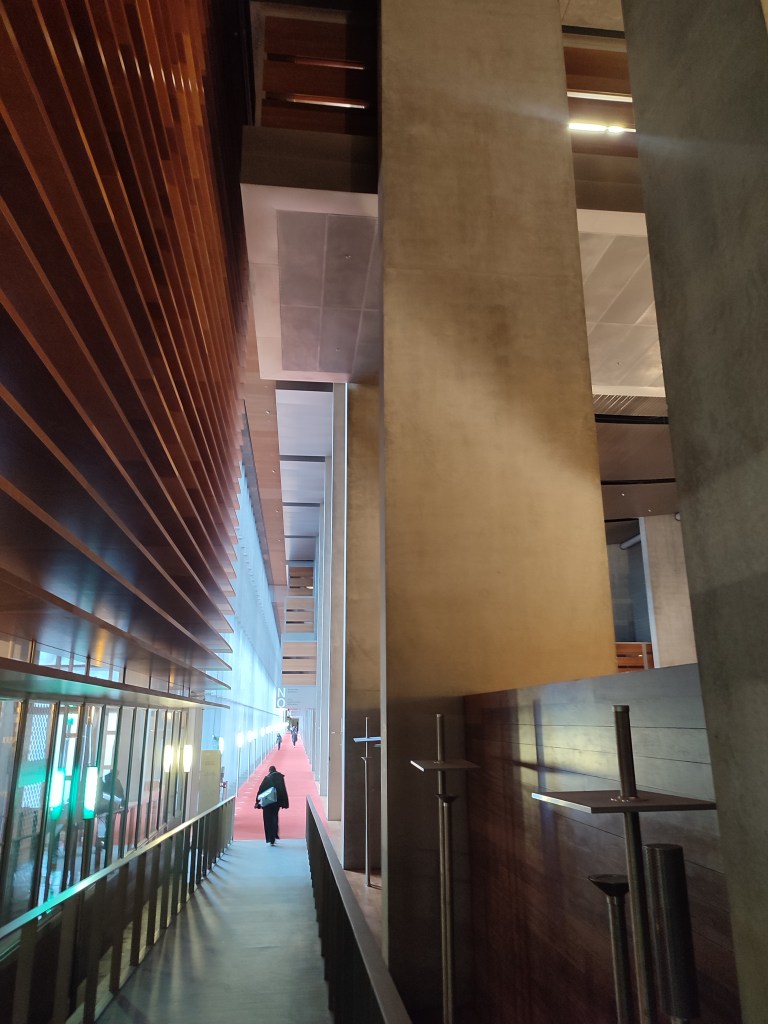
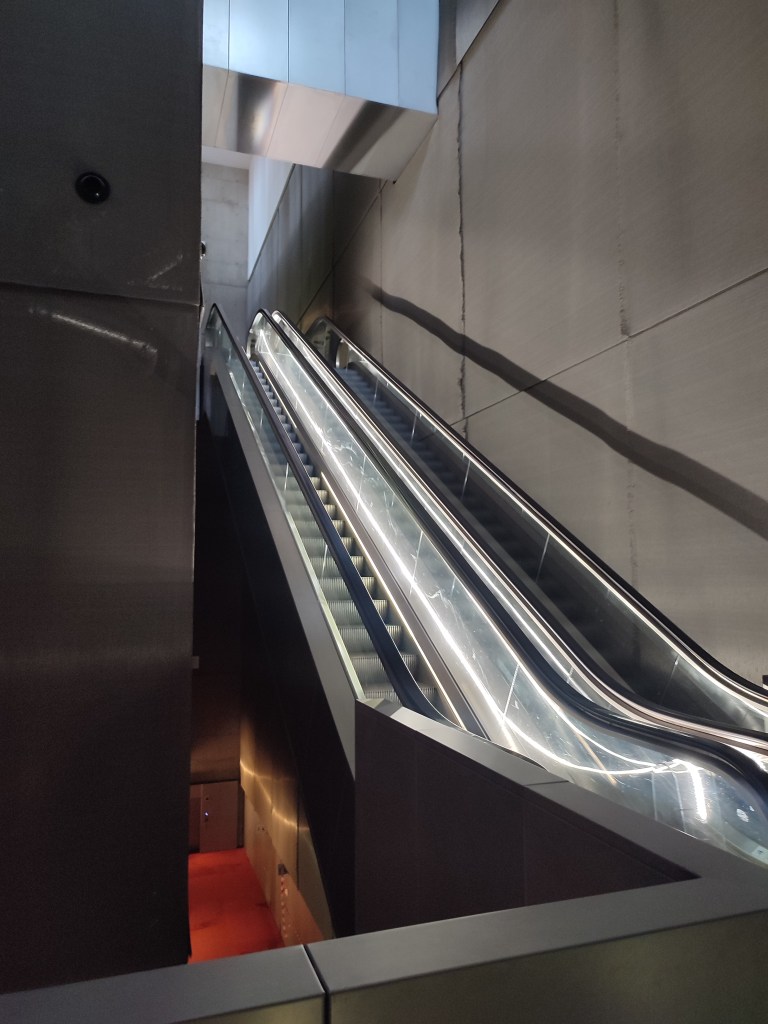
Arriving to the archive was intimidating at first: the building is a brutalist masterpiece of monumental proportions, with several security checks before one can access the actual archive. My previous archival visit was to the perhaps more beginner friendly archive of the Medical Faculty here in Paris, BIU Santé Médecine. As an archive (and building) it is much smaller, but no less interesting in regard to medical history. But this time around, I wanted to tackle the real beast, the national archive.
To access the archive, I registered as a researcher to get a library card that also functioned as key to open the multiple gates to the archives. The main event, and indeed the source that I found the most rewarding was the over 500-page encyclopaedic work on medical electricity by Joseph-Aignan Sigaud de Lafond, a French natural philosopher and a disciple of Nollet from 1803. It took no longer than a half an hour to have de Lafond’s De l’électricité médicale in front of me; a testament to a sentiment I have felt for a while now: Librarians are angels who walk among us.
Finding Electrical Knowledge from the Archive
Most of my week was spent photographing and cataloguing de Lafond’s work; my main interests were his chapters on nervous illnesses and paralysis, which take up almost one third of the book, signifying how obvious the connection between nerves and electricity would have been to someone using medical electricity in the early nineteenth century. To my surprise De Lafond also wrote how electricity could be used in issues of fertility in women, something that I have not seen other writers of this time go into detail as much as this work did.
Additionally, another resource that has not yet been fully digitized is the archive of medical dissertations. And indeed, some of them also concerned medical electricity. I focused on a few selected dissertations from the Montpellier medical faculty from 1806. These dissertations for large parts summarized the work of previous scholars, perhaps understandable since they were written by young doctors, only getting their doctors licenses. Still, some of them offered a valuable glimpse to the general outlook and attitude towards medical electricity. If a medical student was a aware of the discussions happening around the connection between nerves and electricity, for example, it is safe to say that this conversation would have been somewhat widely known.
Visiting The Museum of Medical History
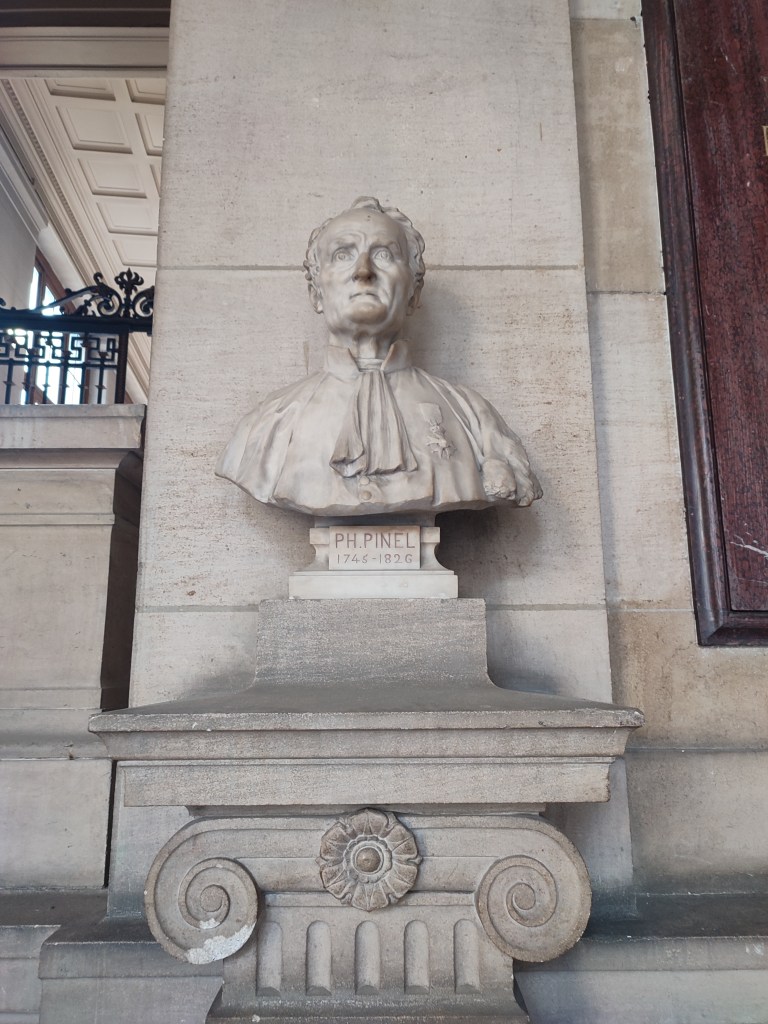
During my last day in Paris this time around, I revisited the medical faculty’s building, but this time not for the library but instead their museum of medical history. On my walk up to the third floor where the museum was, I was met with busts of the “great men” of medicine, some, like Philippe Pinel, very relevant to my own research.
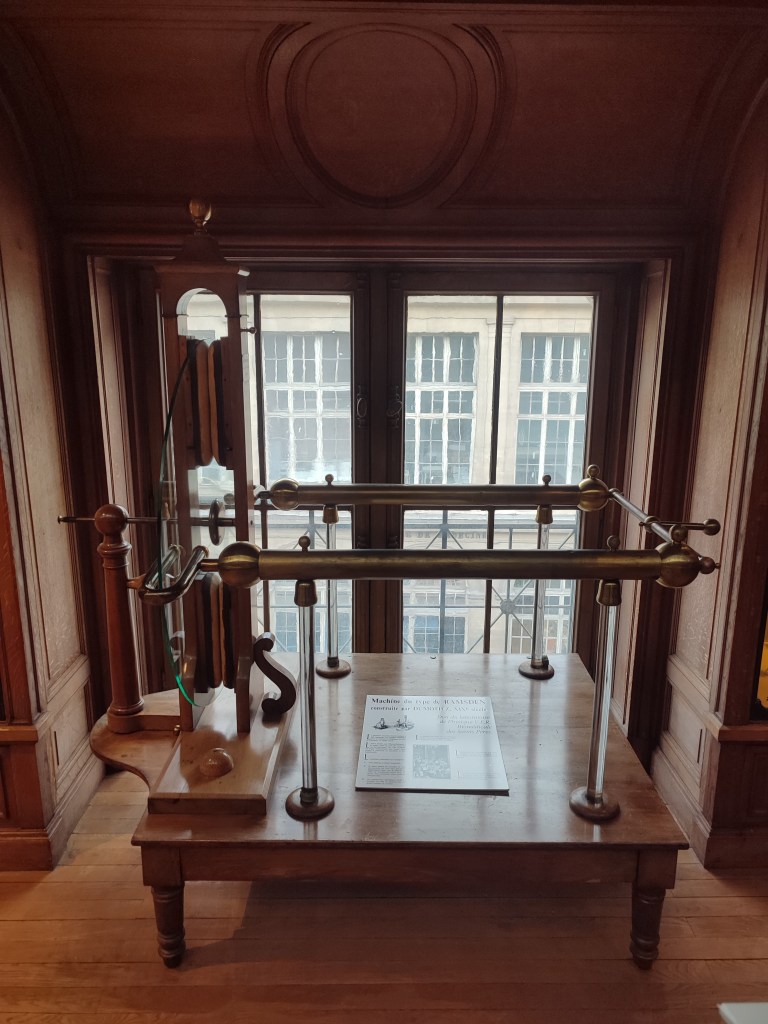
The real price, was, however, in the museum: an electrical conductor, named the Ramsden machine, that was used from 1760s forward. Seeing this quite massive apparatus up close, truly drove home the effort that acquiring, assembling and using such a machine would have taken, and how powerful and impressive the treatment might have seemed to a patient in 18th century France.
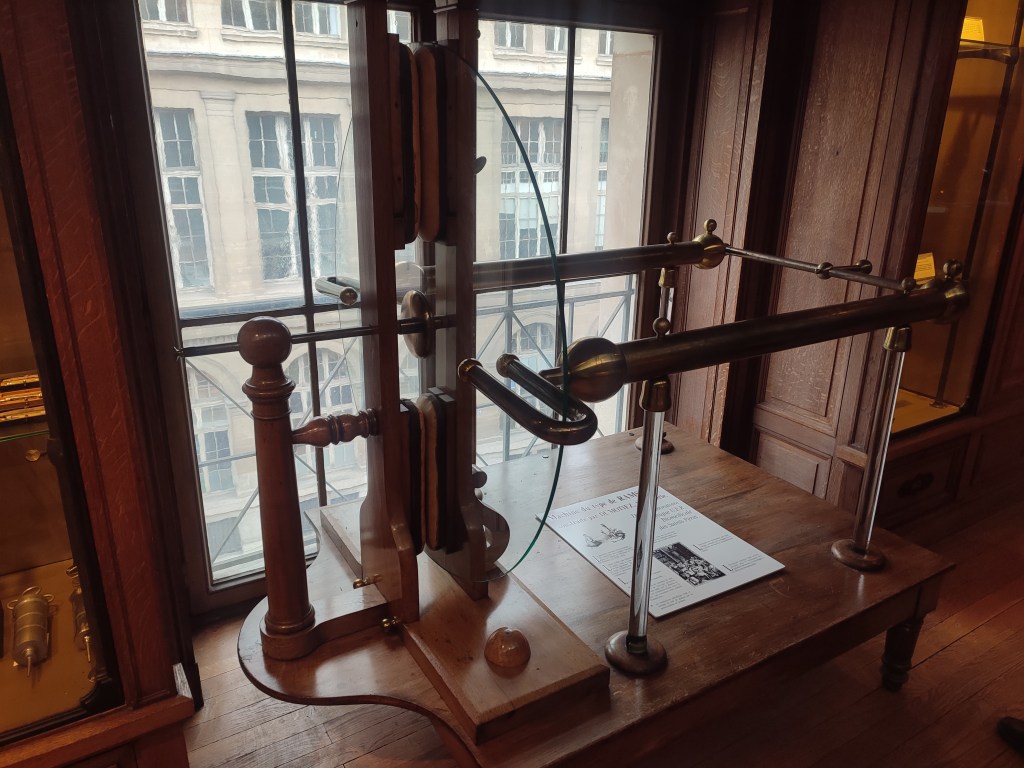
Author: Edna Huotari
Photos: Edna Huotari


Vastaa