
The keynote speakers for the conference are Professor Paola Bertucci, Professor Lauren Kassell, and Senior Lecturer Markku Hokkanen.
KEYNOTE 1
Wednesday 11 March 2026 – Professor Lauren Kassell
Bedside Medicine in Early Modern England
This talk places everyday accounts of medical encounters alongside prescriptive models of ‘bedside manners’ and ‘bedside medicine’. It centres on the casebooks of Richard Napier, the seventeenth-century English clergyman who recorded forty years of astrological medical consultations. By following the enduring pattern of bedside manners prescribed by thirteenth-century European physicians and surgeons and adopted by later practitioners, the talk interrogates Napier’s records for evidence of the approach, the meeting, encounters with other practitioners, treatments, what to say about hopeless cases, and payment. The result is a fresh account of the dynamics of trust and authority, patient choice, practitioner competition, regimes of knowledge, and the politics of medical practice across the spectrum of medical encounters in seventeenth-century England; we hope this analysis can be generalized to medieval and early modern Europe.
This lecture is based on research conducted together with Dr Robert Ralley.
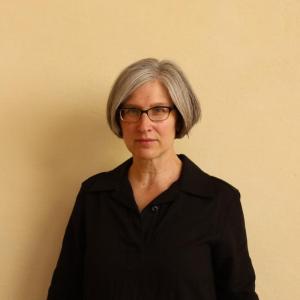
Lauren Kassell is Professor of History of Science at the Department of History at the European University Institute and Professor of History of Science and Medicine at the Department of History and Philosophy, University of Cambridge (on leave). Her work focuses on everyday medicine and the occult sciences in early modern England, extends to the history of gender and generation, and encompasses digital humanities. She is General Editor of The Cambridge History of Medicine, 6 Volumes.
KEYNOTE 2
Thursday 12 March 2026 – Senior Lecturer Markku Hokkanen
Negotiating Healing Between Marginal and Mainstream: Experimentation and Cross-Cultural Medical Encounters in South-Central Africa, c. 1850s-1900s
Historians of medicine in the age of European imperialism have sought to move beyond binaries and dichotomies (such as traditional/modern, Indigenous/Western) to better understand the complex exchanges, contests and co-existence between different medical systems, epistemologies and practices. In this talk, I argue that attention to experimentation is welcome addition to studies of medical practice and knowledge, as it offers one way of thinking about the frequently “messy” colonial situations, in which defining both marginal and mainstream is not often clear-cut. With brief case studies of Afro-European encounters over medicine and healing, I will also explore the porous boundaries between medicine, magic and religion in late nineteenth century South-Central Africa.
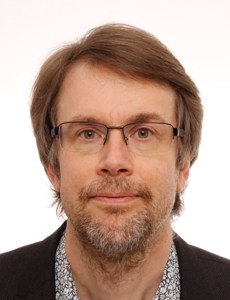
Dr Markku Hokkanen is a Senior Lecturer in History at the Department of History, University of Oulu. He specializes in modern cultural, social and intellectual history of medicine and health, particularly in southern Africa and British empire. His publications include the monograph Medicine, mobility and the empire: Nyasaland networks, 1859-1960 (Manchester University Press 2017) and the co-edited collection Healers and Empires in Global History (Palgrave 2019). Hokkanen is currently co-editing a collection on healers and politics in African history, based on an Academy of Finland-funded research project he led in 2019-23. His broader research interests cover imperial and colonial history, African history and historical methodology. Hokkanen is leading a Kone Foundation-funded research project on the global history of Finnish forestry expertise. He is currently a Visiting Fellow at Clare Hall, University of Cambridge.
KEYNOTE 3
Friday 13 March 2026 – Professor Paola Bertucci
The Anatomy of the Living: Occupational Health between Medical Knowledge and Statecraft
This keynote focuses on one of the most influential medical texts of the early modern period: Bernardino Ramazzini’s De Morbis Artificum Diatriba (1700; expanded 1713). Often celebrated as the first treatise on occupational medicine, De Morbis belonged in fact to a late seventeenth-century neo-Hippocratic reorientation of medicine toward prediction, prevention, and population health. Reading it alongside Ramazzini’s work on barometric measurements and epidemiological observations, I argue that The Diseases of Workers reconceives occupations as medically meaningful collectivities—groups whose characteristic exposures make disease patterns intelligible at the level of populations. In Ramazzini’s work, this becomes an “anatomy of the living”: a form of medical knowledge built not from the dissection of dead bodies, but from observing how illness distributes itself across the social body. This shift from the dead individual to the living collectivity also marks a shift in medicine’s horizon: in Ramazzini’s framing, governments are sustained by the mechanical arts, and protecting workers from the predictable harms of their trades becomes a form of care for the polity itself. By tying prevention to the preservation of population, productivity, and prosperity, De Morbis advances a claim for medical expertise as part of the ordinary functioning of the state.
Paola Bertucci is Professor in the Department of History and in the History of Science and Medicine Program at Yale University. She is the author of the prize-winning Artisanal Enlightenment: Science and the Mechanical Arts in Old Regime France (Yale University Press, 2017), and most recently, of In the Land of Marvels. Science, Fabricated Realities, and Industrial Espionage in the Age of the Grand Tour (Johns Hopkins University Press, 2023), which received the 2025 Paul Bunge prize for best book on the history of scientific instruments.

 Elbow
Elbow 