
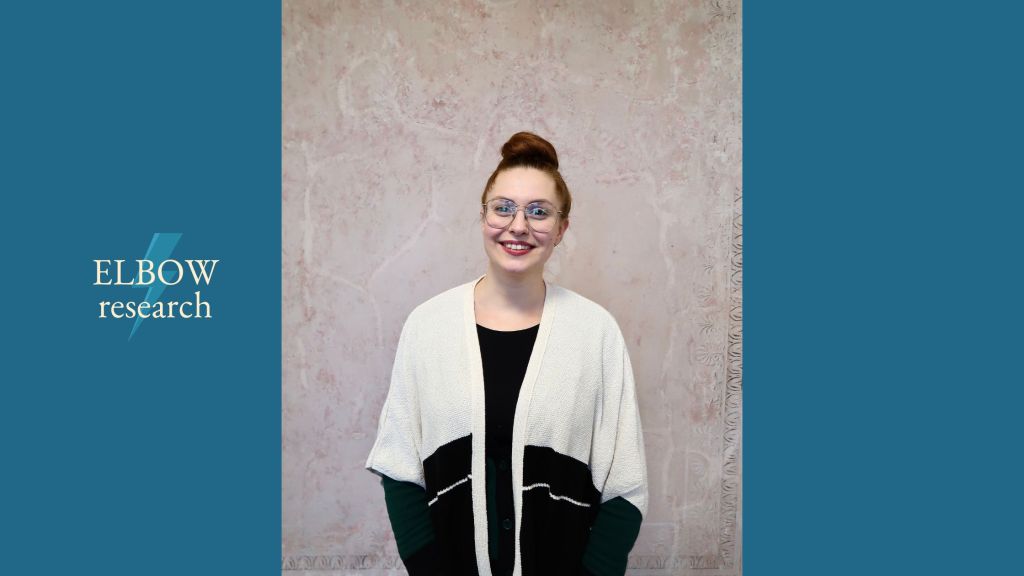
We would like to introduce our Fellow ELBOW research members – or FELBOWs – to our blog readers.
In the previous blog posts from a year ago, we have got to know the researchers in our project: project leader Soile Ylivuori, university researcher Stefan Schröder, and doctoral researcher Edna Huotari.
Since October this year, we have had a great joy to work with our newest team member, Saara-Maija Kontturi, who joined the team at the point when Annika Raapke continued towards new research challenges. All the best for Annika to her new adventures and warmly welcome to the team, Saara-Maija!
In this blogpost, you will get to know Saara-Maija – continue reading the interview and you will get to know her a little better!
Who are you and what is your role in the project?
I’m Saara-Maija Kontturi, ELBOW’s new post-doc researcher since October 2024. I specialize in medical history, with a special focus in the history of physicians and medical treatment. I got my PhD in History at the University of Jyväskylä in 2021 with a dissertation on the early development and professionalization of physicians in Finland, c. 1750-1850.
How did you get interested in history in the first place?
I guess I’ve always been a “researcher personality” and fascinated with the idea of how different human life has been compared to our modern life. I got the first glimpses of that as a child reading history-inspired fantasy and playing historical PC games, but I consider myself a late bloomer, as in elementary school I was not very interested in history as a school subject. I first developed a special interest with the history of diseases and later became enthusiastic about history in general.
What is your research topic in this project?
My research focus is in the transfer and construction of medical knowledge, as well as the experiential aspects of medical electricity. I’m especially interested in the concept of trust between the physician and the patient, as medical electricity was a new, experimental and potentially very painful treatment requiring a lot of trust – during a time when there was generally not a lot of trust towards medical professionals yet.
Thus, medical electricity provides an interesting reflection of the limits of the doctor-patient-relationship at the time when medicine and physicians as a profession were still only establishing their status. I will be focusing on Sweden, but I will also take a look at the transfer of medical knowledge around Europe and the world.
What is the best part of being a historian?
Learning to ask questions, gaining a broad perspective on the past as well as the present. I’ve also always enjoyed writing, and that is something I get to do a lot as a researcher.
What is the weirdest thing you have come up with in an archive?
Not necessary weird, but the most surprising and interesting has been a 19th century recipe booklet filled with delicious-sounding meals and especially desserts!
How would you describe ELBOW project in one sentence?
A great team sharing actively their expertise, joined by medical electricity!
 Elbow
Elbow 
Jätä kommentti